
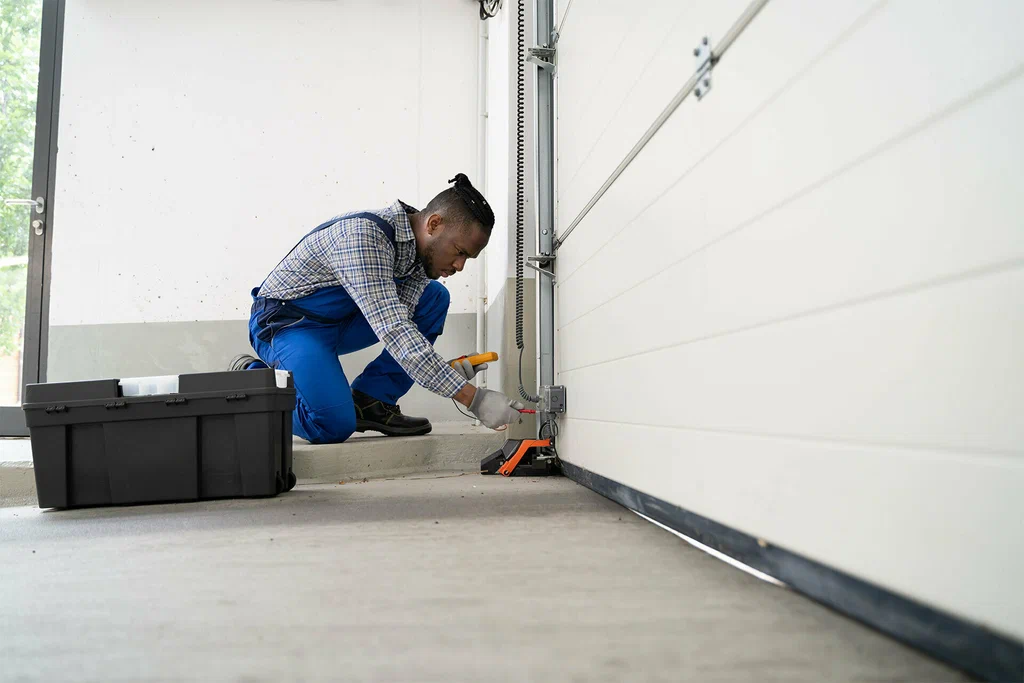
A garage door is one of the most heavily used moving systems in a home, cycling open and closed hundreds of times a year while supporting hundreds of pounds of weight under spring tension. Most homeowners only think about that system when it stops working, but the difference between a door that lasts fifteen years without a major failure and one that needs constant repairs almost always comes down to whether it received regular maintenance along the way.
Why Garage Doors Fail Faster Than Homeowners Expect
Every garage door is a system of interdependent parts: springs, cables, rollers, tracks, and an opener mechanism all working together under constant mechanical stress. When one component wears down without being caught early, it puts additional strain on the parts around it, accelerating wear across the entire system rather than staying isolated to a single part.
Torsion springs, for example, are engineered for a specific number of open-close cycles before they’re expected to fail, typically somewhere between seven and twelve years of average use. Without regular inspection, a spring nearing the end of its lifespan gives little warning before it breaks, and a broken spring under tension is one of the more dangerous failures a garage door system can experience.
Preventive Maintenance Versus Reactive Repair
Homeowners generally fall into one of two patterns: scheduling regular maintenance, or waiting until something visibly breaks before calling for service. The financial and safety differences between these two approaches are significant.
| Factor | Preventive Maintenance | Reactive Repair |
|---|---|---|
| Cost per visit | Lower, planned service | Higher, often urgent labor rates |
| Component lifespan | Extended through early adjustment | Shortened by compounding wear |
| Safety risk | Minimized through regular inspection | Higher, failures often sudden |
| Convenience | Scheduled around your availability | Often urgent, disrupts daily routine |
| Opener system wear | Reduced strain from balanced door | Increased strain from misalignment |
| Long-term cost | Lower, spread over regular visits | Higher, concentrated in emergency repairs |
The opener system wear row is one homeowners frequently overlook. A garage door opener is engineered to lift a properly balanced door, and when springs weaken or tracks fall out of alignment without being caught, the opener has to work harder to compensate. This accelerates wear on the opener motor itself, meaning neglected spring or track maintenance often leads to a second, unrelated repair bill for the opener system down the line.
What a Proper Maintenance Visit Actually Covers
A thorough maintenance service goes well beyond a quick visual check. Springs and cables are inspected for wear, fraying, or signs of impending failure, since these components carry the full weight of the door under tension and represent the highest safety risk when they fail unexpectedly.
Rollers and tracks are checked for alignment and wear, since a door running on misaligned tracks creates uneven strain that accelerates damage to nearly every other component in the system. Lubrication of moving parts, including hinges, rollers, and springs, reduces friction and prevents the kind of metal-on-metal wear that shortens component lifespan significantly faster than normal use alone would cause.
Balance and alignment testing confirms the door is lifting evenly without placing excess strain on the opener, while a full hardware and fastener check catches loose bolts or brackets before they become a functional or safety issue. Homeowners scheduling garage door maintenance on a regular basis benefit from having all of these checks performed together, rather than addressing issues individually as they surface.
How Often Maintenance Should Actually Happen
Most manufacturers and service professionals recommend a full maintenance inspection at least once a year for residential garage doors, with more frequent service recommended for doors used multiple times daily or exposed to harsher weather conditions. Homeowners in regions with significant seasonal temperature swings, including much of the Midwest, benefit from timing at least one inspection before winter, since cold temperatures cause metal components to contract and lubricant to thicken, both of which increase strain on the system during the coldest months.
Commercial and industrial doors, which typically see significantly higher daily cycle counts than residential doors, generally require more frequent maintenance intervals to keep pace with the additional wear from constant use.
Warning Signs That Maintenance Is Overdue
Certain symptoms indicate a garage door system needs attention sooner rather than waiting for the next scheduled visit. A door that makes grinding, squeaking, or scraping sounds during operation is signaling friction or misalignment that lubrication and adjustment can often resolve before it becomes a larger issue. Visible sagging on one side, uneven movement, or a door that reverses unexpectedly during closing are all signs that balance or safety sensor issues need immediate professional attention rather than continued use.
Frequently Asked Questions
Can homeowners perform garage door maintenance themselves? Basic tasks like visual inspection and light lubrication of certain components can be done by homeowners, but spring adjustment, cable inspection, and balance testing involve components under significant tension and are best left to trained technicians for safety reasons.
Does maintenance actually extend the life of a garage door opener? Yes. A properly balanced and lubricated door places significantly less strain on the opener motor, which is one of the more expensive components to replace if it fails prematurely due to compensating for a poorly maintained door system.
How long does a typical maintenance visit take? A thorough inspection and service visit typically takes under an hour for a standard residential door, though commercial and industrial systems with additional components may require more time.
Is maintenance necessary for a relatively new garage door? Yes. Even new doors benefit from early maintenance visits, since proper lubrication and initial balance checks help prevent premature wear patterns from developing during the door’s first few years of regular use.
Protecting the System Before It Fails
A garage door rarely fails without warning signs building up beforehand, whether that’s a slightly noisier operation, a subtle change in how evenly the door moves, or hardware that has quietly loosened over months of use. Catching these signals early through regular maintenance is consistently less expensive, safer, and more convenient than waiting for a full system failure that often happens at the least convenient possible moment.
Homeowners and businesses across Sterling Heights and the surrounding Michigan communities who want their garage door system to reach its full expected lifespan without unexpected breakdowns benefit from a consistent maintenance schedule rather than a reactive approach. J’s Overhead Door LLC provides the thorough inspection and preventive service needed to keep garage door systems running safely and reliably year-round.